This article was originally featured on FE News.
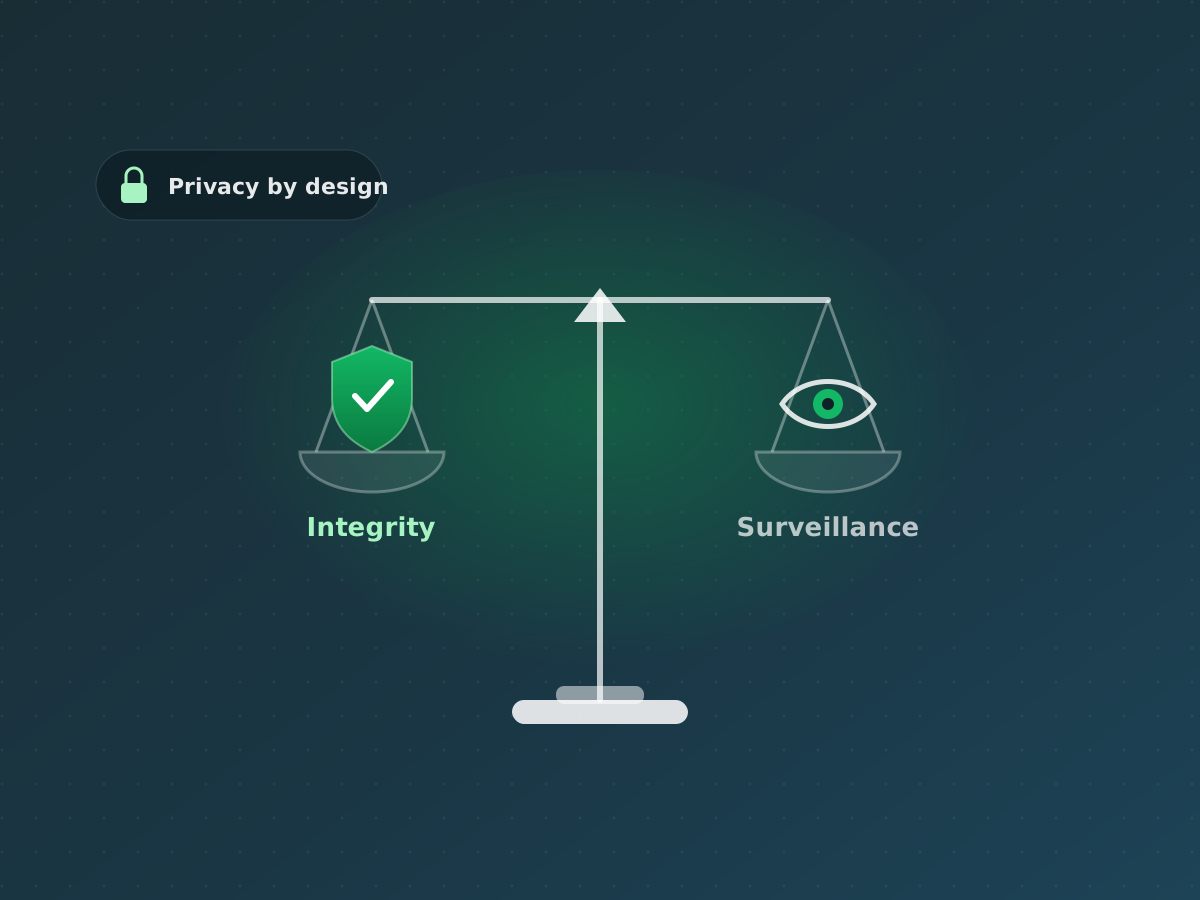
There is an understandable instinct, when the stakes are high, to secure an online exam by watching as much as possible. If cheating is the risk, surely more monitoring is the answer? But treating surveillance as a dial you simply turn up is both an ethical and a practical mistake. Piling on controls does not automatically make an exam more trustworthy — and it can quietly erode the fairness and confidence that make a result worth anything.
More surveillance is not more trust
A heavily monitored exam can feel rigorous while being no more valid than a lightly monitored one. What it reliably does is change the experience for the candidate: it raises anxiety, it treats everyone as a suspect, and it generates a flood of "anomalies" that still require human judgement to interpret. The confidence you want in a result comes from sound design and defensible process, not from the sheer volume of data you collected along the way.
The ethical costs of blanket controls
Applying maximum security to every assessment, regardless of what is actually at stake, creates three predictable harms.
It penalises the wrong people
Intrusive controls fall hardest on candidates who cannot easily conform to them — people with disabilities, atypical movements, caring responsibilities, shared homes or modest equipment. A control that flags them disproportionately is not neutral; it is an accessibility and fairness problem dressed up as security.
It invites legal and regulatory challenge
Collecting biometric data, recording candidates continuously and automating consequential decisions are exactly the practices regulators are scrutinising most closely. An organisation that applies them indiscriminately is taking on legal exposure that is often larger than the integrity risk it set out to manage.
It spends trust it cannot easily rebuild
Candidate trust, once lost, is expensive to recover. An exam process that feels invasive damages the relationship between an institution and the people it assesses — and that reputational cost outlasts any single exam sitting.
Proportionate controls that scale to the stakes
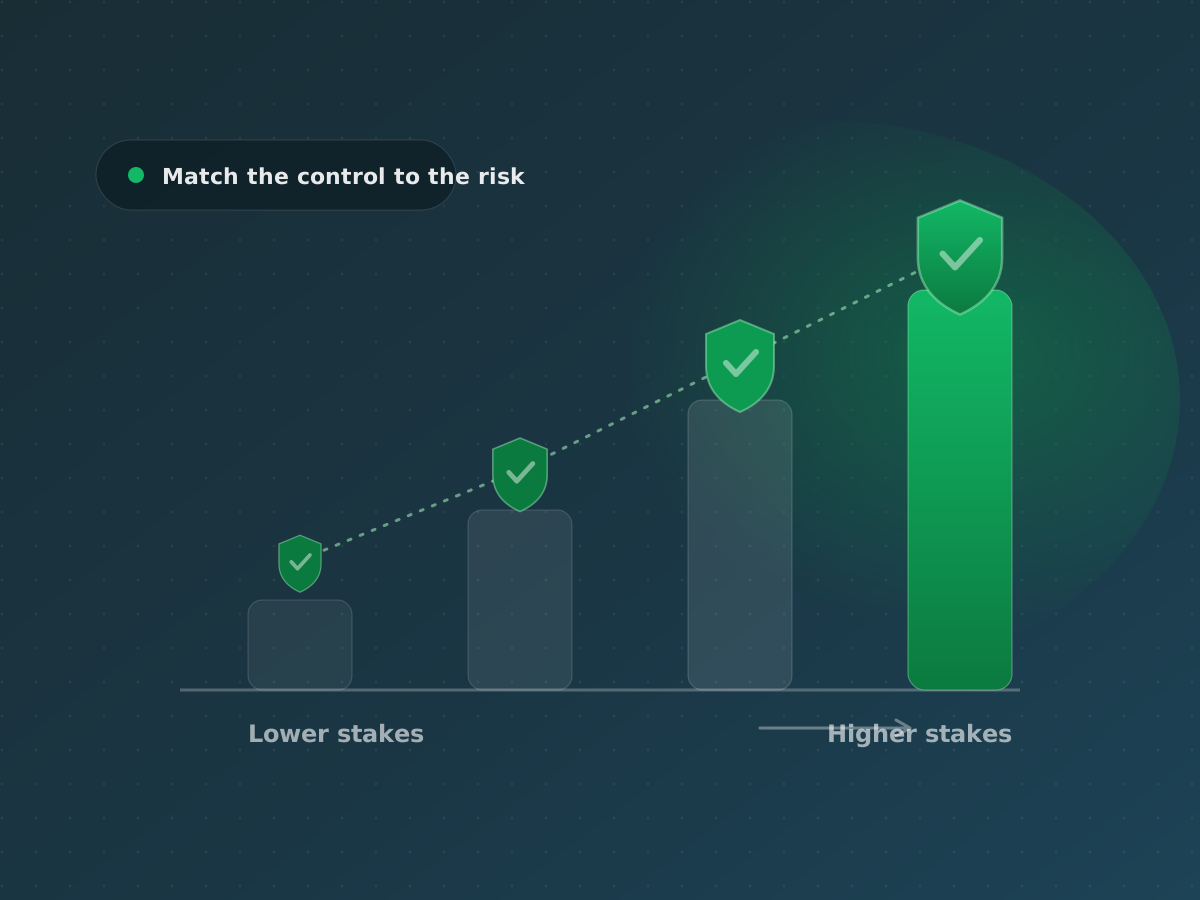
The ethical and effective approach is proportionality: match the security to the genuine risk of the specific assessment. That starts with a simple question asked honestly for each exam — what is actually at stake here, and what threats realistically apply?
- A low-stakes, formative check needs little more than good assessment design and sensible settings.
- A moderate-stakes exam might add randomised question banks, timing controls and access restrictions.
- A high-stakes licensing or certification exam may justify full proctoring and lockdown — applied transparently, with the minimum data necessary.
The goal is the least intrusive control that addresses the real threat, not the most intrusive control available.
Building integrity into the design
Proportionality works best when integrity is designed into the assessment rather than policed at the surface. Well-constructed items, large and varied question pools, meaningful time limits and thoughtful exam structure reduce the opportunity to cheat before any monitoring is involved. Get the design right and you need less surveillance to achieve the same integrity — which is better for everyone.
Privacy by design, transparency and governance
Finally, how controls are implemented matters as much as which controls you choose:
- Privacy by design: collect only what the stakes justify, and be deliberate about what you decline to collect.
- Transparency: tell candidates what is monitored and why. Consent given with understanding costs far less trust than monitoring that feels hidden.
- Governance: keep a human in the loop for decisions that affect a result, with a clear appeals route and an audit trail behind every judgement.
Credible digital assessment does not come from watching everything. It comes from watching the right things, proportionately, with candidates' trust and dignity treated as part of the design rather than a casualty of it. That is not a softer position on integrity — it is a more honest one.
This article was originally featured on FE News.