Nobody remembers the exam platform that worked. They remember the one that did not.
The failures are specific and they are all survivable right up until the morning they happen: a cohort of 900 candidates hitting the login screen at nine o'clock and the platform buckling. A candidate with a screen reader who cannot start the paper everyone else has started. A cheating allegation you believe is real and cannot evidence, because the only record you have is a proctor's recollection. A results deadline missed because marking and certification live in three different systems.
Choosing an online exam platform is a risk decision before it is a features decision. Every vendor's website will tell you it is secure, scalable and easy to use. The questions below are the ones that actually separate them, and each comes with what a good answer sounds like so you can tell a capability from a claim.
Get started if you would rather walk through them with someone.
1. Can you evidence a cheating allegation months later?
Ask: what exactly is recorded during an exam, how long is it kept, and what can a candidate see if they appeal?
Proctoring is the feature most often bought on the strength of a demo and most often found wanting during an appeal. A live invigilator watching a grid of faces produces very little you can put in front of an appeals panel. What matters is the durable record.
A good answer names the artefacts: webcam and screen captures, a timestamped log of rule violations, and a review interface where a human makes the final call rather than an algorithm. It also tells you the retention period without having to check.
Synap's online proctoring and anti-cheat tools are covered in the next section, because proctoring is where most of the real differences between platforms sit.
2. Is the proctoring proportionate to the stakes?
A weekly formative quiz does not need the same invigilation as a professional certification, and a platform that only offers one mode forces you to over-police low-stakes assessments or under-police high-stakes ones.
A good answer describes a range rather than a product: unproctored for practice, automated capture and breach detection for the middle, lockdown and full review for high-stakes papers.
Synap's own proctoring, Synoptic, is built into the platform rather than bolted on from a third party. It captures webcam and screen activity as snapshots or recordings, logs breaches for review, and offers a lockdown mode that restricts access to other resources during the paper. Because it is first-party, candidate data does not take a detour through another vendor's systems, which is usually the first thing a university's data protection officer asks about.
3. Will it hold up on the worst morning of the year?
Ask: what is the largest number of candidates who have started an exam simultaneously on this platform, not the largest number registered?
Concurrency is where the distinction between a quiz tool and an exam platform becomes visible, and it is the one number vendors are least likely to volunteer.
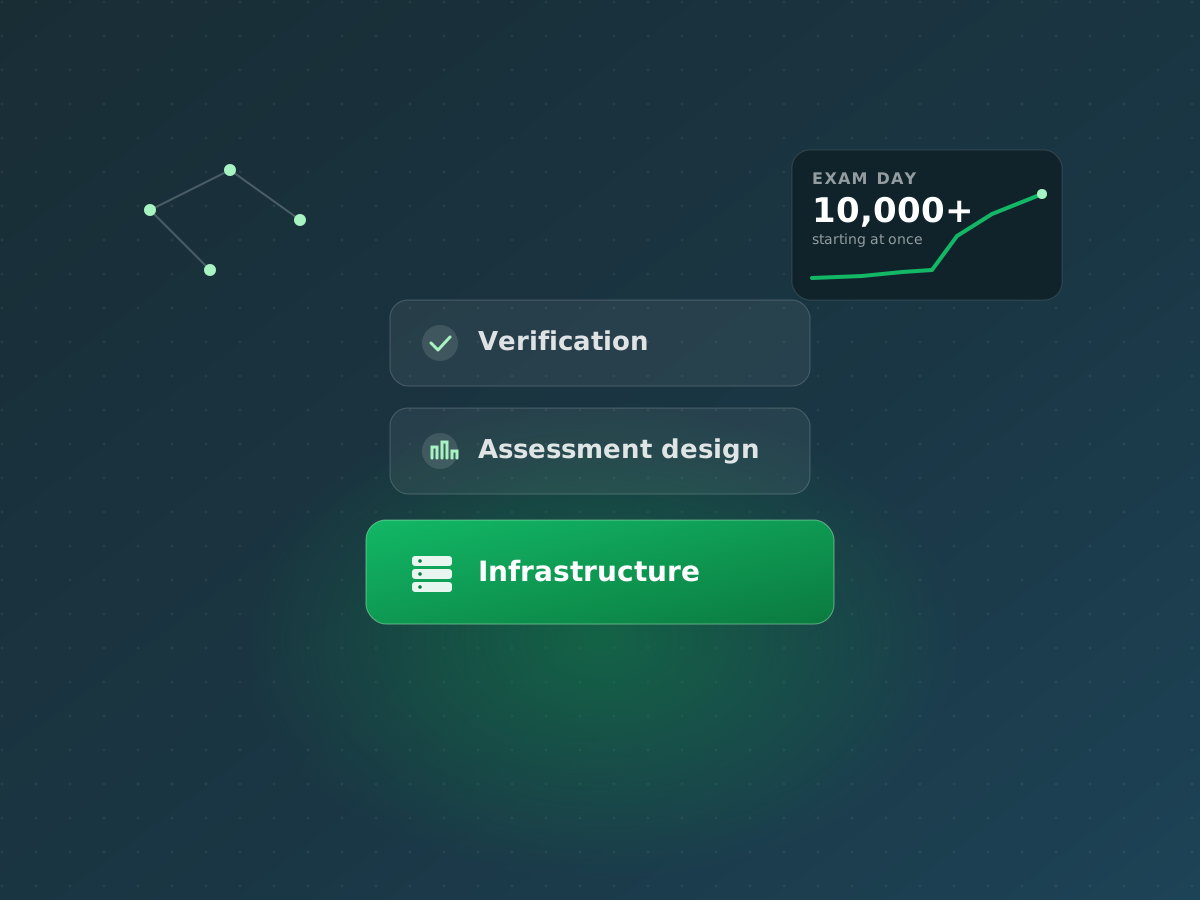
A good answer is a real figure from a real exam session. Synap's is over 10,000 candidates starting concurrently. UK Flour Millers moved from physical testing centres to global online exams on that basis.
4. Can every candidate actually take the exam?
Ask: which accessibility standard, at which conformance level, and what happens on a poor connection?
Accessibility is a legal obligation for UK public bodies and a reputational one for everybody else, but it is also the requirement most often answered with the word "yes" and nothing further.
A good answer names a standard and a level, not an intention. Synap is built to WCAG 2.1 AA and supports screen readers, adjustable font sizes, extra time accommodations, multiple languages, and a low-bandwidth mode for candidates without reliable connections.
5. Does it integrate, or does it expect to replace what you have?
Ask: does the platform speak LTI 1.3, and what happens to results afterwards?
This is where a lot of procurement goes wrong. Institutions already have a learning management system and are not looking to replace it. Synap is an assessment platform, not an LMS: it integrates with Moodle, Canvas, Blackboard and others over LTI 1.3, APIs and Zapier, so candidates launch exams from the environment they already use and results flow back into it.
A good answer covers the return journey too. Getting candidates in is easy; getting grades, certificates and analytics back out into your student record system, Tableau or Salesforce is the part that turns into manual work if the platform cannot export automatically.
6. Will the data tell you anything about your questions?
Ask: what does the platform tell you about the exam itself, not just about the candidates?
Most platforms report scores. Fewer report on question quality, which is what you need to defend a paper or improve it next cycle.
A good answer includes item-level statistics: difficulty, discrimination, cohort comparisons, standard deviations. Synap's exam analytics and reporting covers percentiles and cohort comparisons alongside real-time monitoring during the session, so you can see who has started, who is running short of time, and what marking status each script is in.
The University of Law went further and worked with us on a custom algorithm that predicts exam outcomes with 98% accuracy, used to identify students who need support before they sit.
7. How long until you are actually running exams?
Ask: what does implementation look like, and who does the work?
Procurement timelines slip. The gap between signing and delivering a first exam is rarely discussed before contract and frequently painful afterwards.
A good answer is measured in weeks, not quarters, and is specific about what the vendor does versus what your team does. Iceland's Project Management Association launched their international certification exams on Synap in four days under a deadline.
8. Does it look like your institution?
Ask: can candidates sit the exam without leaving your brand?
For certification bodies and training providers this is not vanity. A candidate who is redirected to an unfamiliar third-party portal mid-process is a candidate more likely to abandon or to raise a support ticket.
A good answer covers logos, colours, imagery and messaging. Synap's portal is branded and can also be white-labelled, and exams can be authored, delivered and marked inside that branded environment.
9. What certifications does the vendor actually hold?
Ask: for the certificate, not the adjective.
"Enterprise-grade security" means nothing. ISO 27001 means a third party audited the vendor's information security management system and issued a certificate with a scope and an expiry date.
A good answer is a document. Synap is ISO 27001 certified and GDPR compliant, with TLS 1.2 in transit and AES-256 at rest, and rates 4.8 on Capterra from verified reviewers.
Which assessments you are actually buying for
The checklist above changes weight depending on what you run. Most organisations run more than one of these, which is the usual argument against buying a separate tool for each.
Formative assessment is quizzes, practice tests and interactive exercises used during learning. Security barely matters; speed of authoring and quality of feedback matter a lot.
Summative assessment measures attainment at the end of a period. Security, proctoring and defensible marking all matter, and so does the marking workflow, because this is where deadlines are lost.
Diagnostic assessment establishes what candidates already know before teaching starts. The value is almost entirely in the analytics and in being able to compare a pre-course and post-course picture.
Certification exams are the most demanding: high stakes, external scrutiny, and a need to evidence integrity long after the exam. Every question in this checklist applies.
Frequently asked questions
What is an online exam platform?
Software for creating, delivering and marking exams remotely, with the security and identity controls that distinguish an exam from a quiz. The difference between an exam platform and a quiz tool is usually proctoring, concurrency and the audit trail.
Do I need to replace my LMS?
No. An assessment platform should sit alongside your LMS over LTI 1.3, handling the exam and returning results. If a vendor's answer involves migrating your courses, they are selling you something else.
How do I compare proctoring between vendors?
Ask each one what an appeals panel would see six months later. The answers diverge quickly.
What should implementation cost in time?
Ask for a named customer who launched under a deadline and how long it took. Four days is possible; so is four months, and the difference is usually how much of the setup the vendor does for you.
Work through it with us
If you are partway through this list and want the remaining answers for Synap specifically, the fastest route is a conversation rather than a pricing page.
Get started and we will walk through your assessment types, your integration requirements and your exam calendar, and tell you honestly where Synap fits and where it does not.