

With online exams now standard across education and professional training, technical reliability alone isn’t enough. The experience of the test taker matters just as much. Exams are a major source of stress for many candidates. An OECD study found that 66% of students feel stressed about poor grades, and 59% worry that taking a test will be difficult. Designed well, online exams can reduce many of the pressures associated with traditional in-person testing - from rigid schedules to distracting environments. This article explores how thoughtful online exam design can help create a calmer, more supportive experience for candidates.
Remote testing and flexible schedules
In-person exams often introduce unnecessary pressure. Candidates may need to travel long distances, take time off work, or sit exams in unfamiliar environments - all of which can add stress before the assessment even begins. Remote testing removes many of these barriers, allowing candidates to sit exams in a familiar setting and manage their time more effectively. When combined with flexible scheduling, online exams can significantly reduce logistical stress and help candidates perform at their best. Below are two scheduling approaches that support a more flexible, candidate-friendly exam experience.
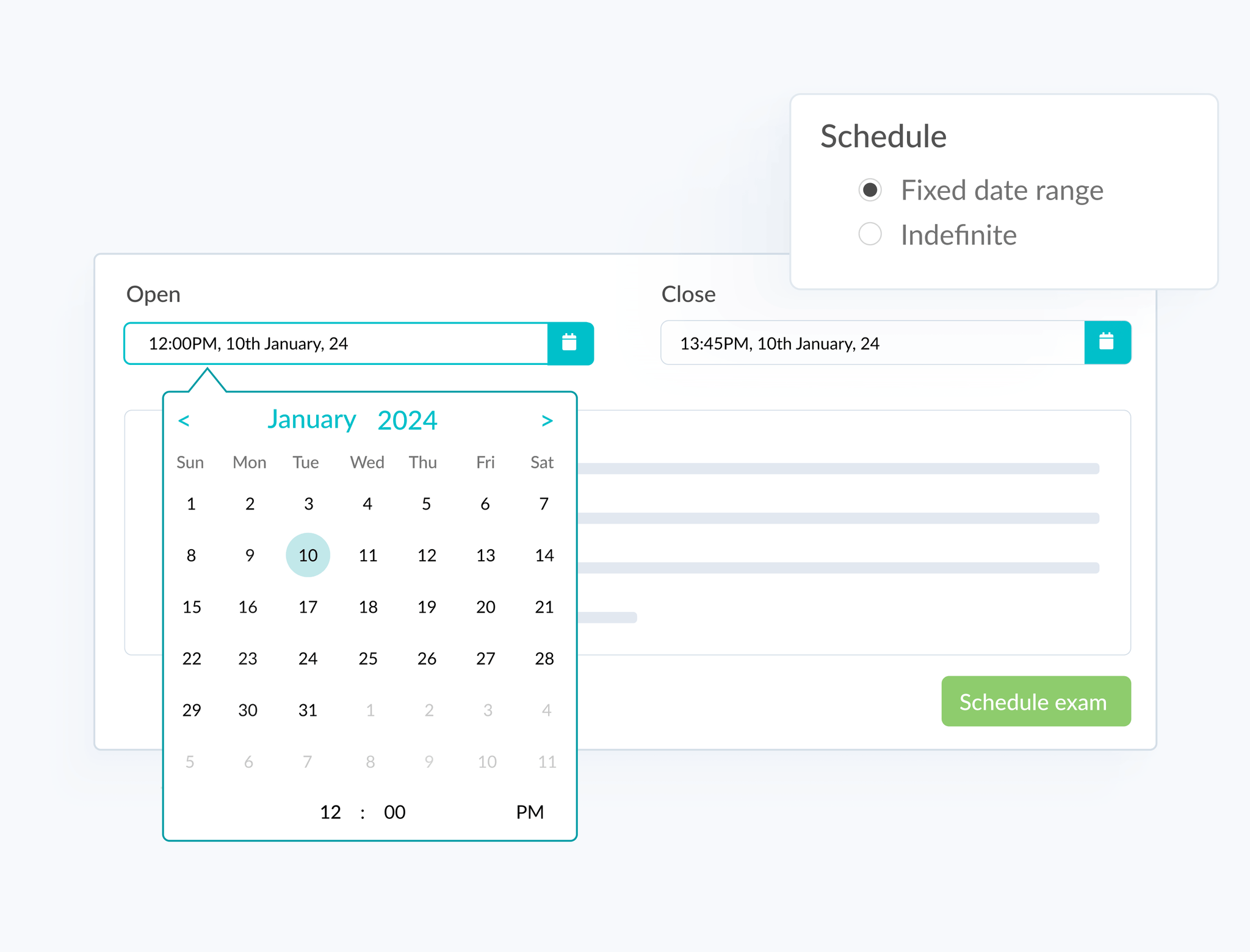
Access windows
Traditional exams often open at a fixed date and time for all candidates - and in many cases, this approach works perfectly well. However, where greater flexibility is needed, access windows offer an alternative.
Instead of requiring all candidates to begin at the same time, access windows allow them to choose when to start within a defined period. This can be particularly useful for candidates balancing work, caring responsibilities, or different time zones, helping them approach the exam feeling more prepared and less pressured.
Relative deadlines
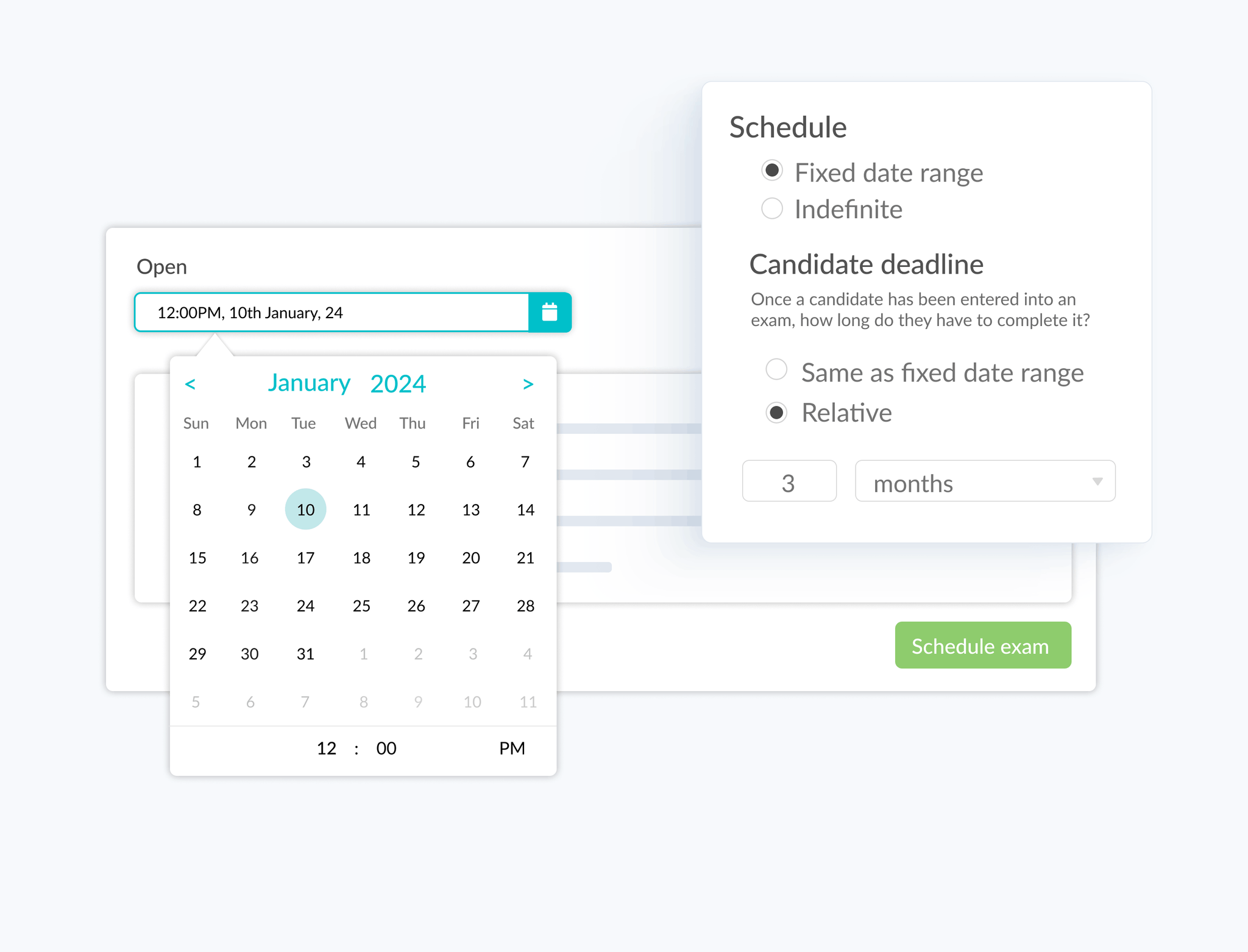
Similarly, while many exams rely on fixed start and end times, relative deadlines provide a flexible alternative where appropriate.
With relative deadlines, each candidate has the same amount of time to complete the exam from the moment they begin or enrol, rather than being constrained by a single universal deadline. This ensures fairness while reducing unnecessary time pressure, particularly for candidates starting at different times or in different circumstances.
Used as an alternative to standard exam opening times, relative deadlines allow institutions to design assessments that are both controlled and more accommodating to candidate needs.
Eliminating distractions
In-person exam settings can introduce a range of distractions; from unfamiliar environments and background noise to the visible presence of other candidates and invigilators. These factors can heighten anxiety and make it harder for candidates to concentrate. Remote exams allow candidates to sit assessments in a familiar, private setting, reducing environmental distractions and social pressure. By creating more consistent and controlled testing conditions, institutions can help candidates focus fully on the assessment itself, leading to improved concentration and a calmer exam experience.
Tools for candidates
Exams are inherently high-pressure, so the tools available during an assessment can have a meaningful impact on candidate confidence and performance. Providing built-in, standardised tools helps candidates focus on demonstrating their knowledge rather than managing logistics or workarounds.
Calculators
Integrated calculators remove the uncertainty associated with physical devices. Candidates don’t need to worry about forgetting equipment, battery failures, or using non-approved models, as the required tools are available directly within the exam interface. This creates a more consistent and controlled experience for all candidates, while reducing unnecessary stress and allowing them to focus fully on the assessment itself.
Highlighters and notes
Digital highlighters and on-screen notes support candidates in actively navigating exam content. They allow candidates to annotate key information, organise their thoughts, and manage longer or more complex questions more effectively. By mirroring familiar exam techniques in a digital format, these tools help candidates stay engaged and work through assessments with greater clarity and confidence.
Feedback and insights
Clear, timely feedback reduces uncertainty for candidates, supports progression and helps build candidate confidence post-exam. Below are some effective ways to provide feedback on an online exam platform at scale:
Quicker results
Waiting for exam results can be a significant source of stress for candidates. Online exams reduce this uncertainty by enabling faster, more predictable results, with automated marking for objective questions and streamlined grading for written responses within the platform.
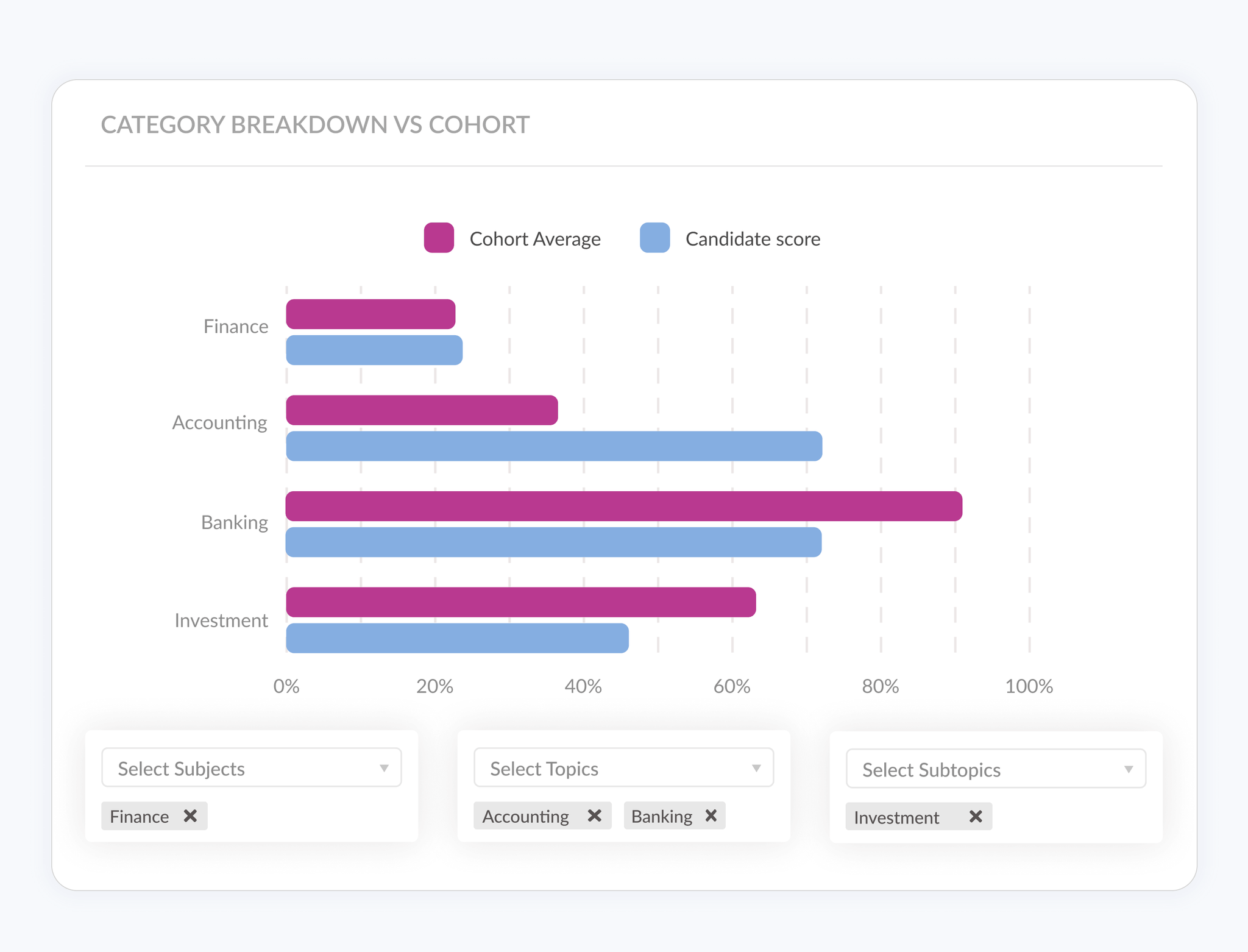
Performance feedback
Insights into performance over time and across subject areas provide candidates with clearer next steps and helps them refocus their efforts. By highlighting patterns, strengths, and gaps, this type of feedback supports more targeted improvement.
Unlike paper-based feedback, which can be lost or overlooked, online exams provide consistent and accessible performance data that candidates can revisit over time, helping build confidence and support ongoing progression.
Engagement data
Understanding how candidates engage with an assessment is key to supporting their success. Online exam platforms provide real-time insights - such as session frequency, question completion rates, and time spent per section - giving candidates clearer visibility into their own behaviours and performance. This data also enables educators to identify patterns, spot potential issues earlier, and adapt support where needed. Unlike traditional assessment methods, which rely on periodic reviews and subjective observation, online engagement data provides timely, objective insight that supports more responsive decision-making.
Customising exam preparation
Online exams make it easier to tailor exam preparation in ways that reduce anxiety and build candidate confidence. Unlike traditional in-person exams, where preparation is often rigid or self-directed, online platforms allow candidates to prepare in formats that better reflect how they will be assessed.
Test formats
Offering a range of exam formats - such as practice tests, untimed assessments, and timed simulations - allows candidates to prepare in ways that suit their circumstances and confidence levels. This flexibility helps candidates become familiar with question styles, pacing, and exam conditions ahead of time, reducing uncertainty and enabling them to approach the assessment feeling more prepared and in control.
Spaced learning
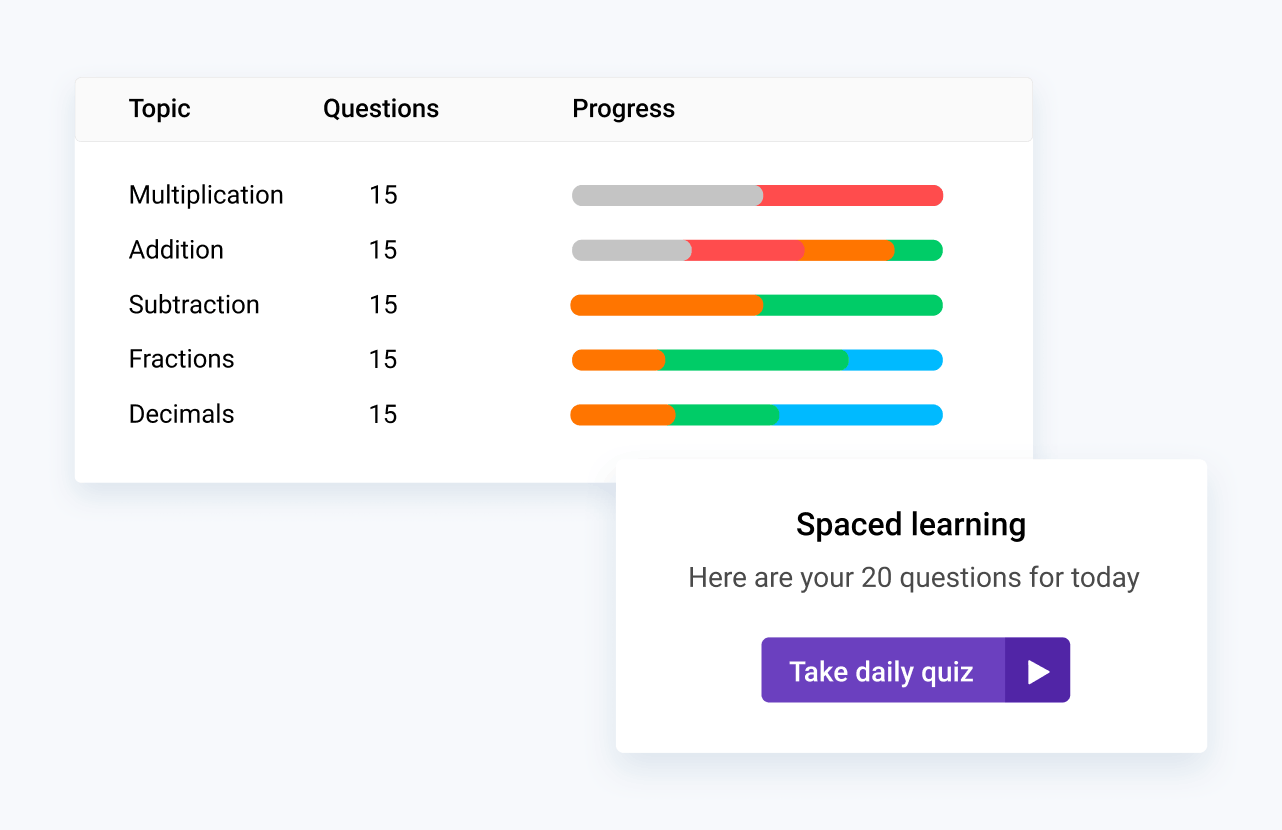
Spaced learning supports exam preparation by reinforcing knowledge over time rather than relying on last-minute revision. Research shows that this approach improves promotes long-term retention and helps candidates apply knowledge more effectively during assessments.
Online platforms can structure spaced learning automatically, supporting consistent preparation and reducing reliance on candidates to manage complex study schedules themselves. This leads to stronger understanding, improved recall, and a calmer exam experience overall.
Conclusion
With online exams now widely adopted, the focus has shifted from simply delivering assessments online to delivering them well. Prioritising the candidate experience is essential for reducing stress, improving performance, and building confidence throughout the assessment process. By combining flexible scheduling, clear feedback, supportive exam tools, and tailored preparation options, institutions and organisations can create assessments that are fair, consistent, and candidate-friendly - without sacrificing control or integrity.
Learn more about Synap
Book a demo to see how flexible scheduling, feedback, and candidate tools can work together to create a calmer, more effective online exam experience.
References
- Pascoe, M. C., Hetrick, S. E., & Parker, A. G. (2019). The impact of stress on students in secondary school and higher education. International Journal of Adolescence and Youth.https://www.tandfonline.com/doi/full/10.1080/02673843.2019.1596823
- Price, B., Fu, Y., Baker, H., Connelly, D., Ritchey, M. L., & Genega, E. M. (2010). Online Spaced Education Generates Transfer and Improves Long-Term Retention of Diagnostic Skills: A Randomized Controlled Trial.https://www.sciencedirect.com/science/article/abs/pii/S1072751510003406