Introduction
If you deliver exams regularly, you know how much time goes into the work around them: creating papers, monitoring sessions, marking scripts, chasing retakes. A lot of that sits outside actual teaching.
The good news is that online exam platforms can take a meaningful chunk of that admin off your plate and help your team work more efficiently.
Below are 10 features worth looking for. Each one reduces workload for educators while keeping exam security and integrity intact.
1. Automatic marking of diverse question types
Traditional grading, especially on paper, is one of the biggest time sinks for assessment teams. Educators can spend hours reviewing scripts [1], and some research puts faculty grading time at around 54 hours a year [2].
Online exam platforms tackle this by automating the marking process. At minimum, most can automatically grade multiple choice questions, which alone removes a large manual task.
More auto-graded question types
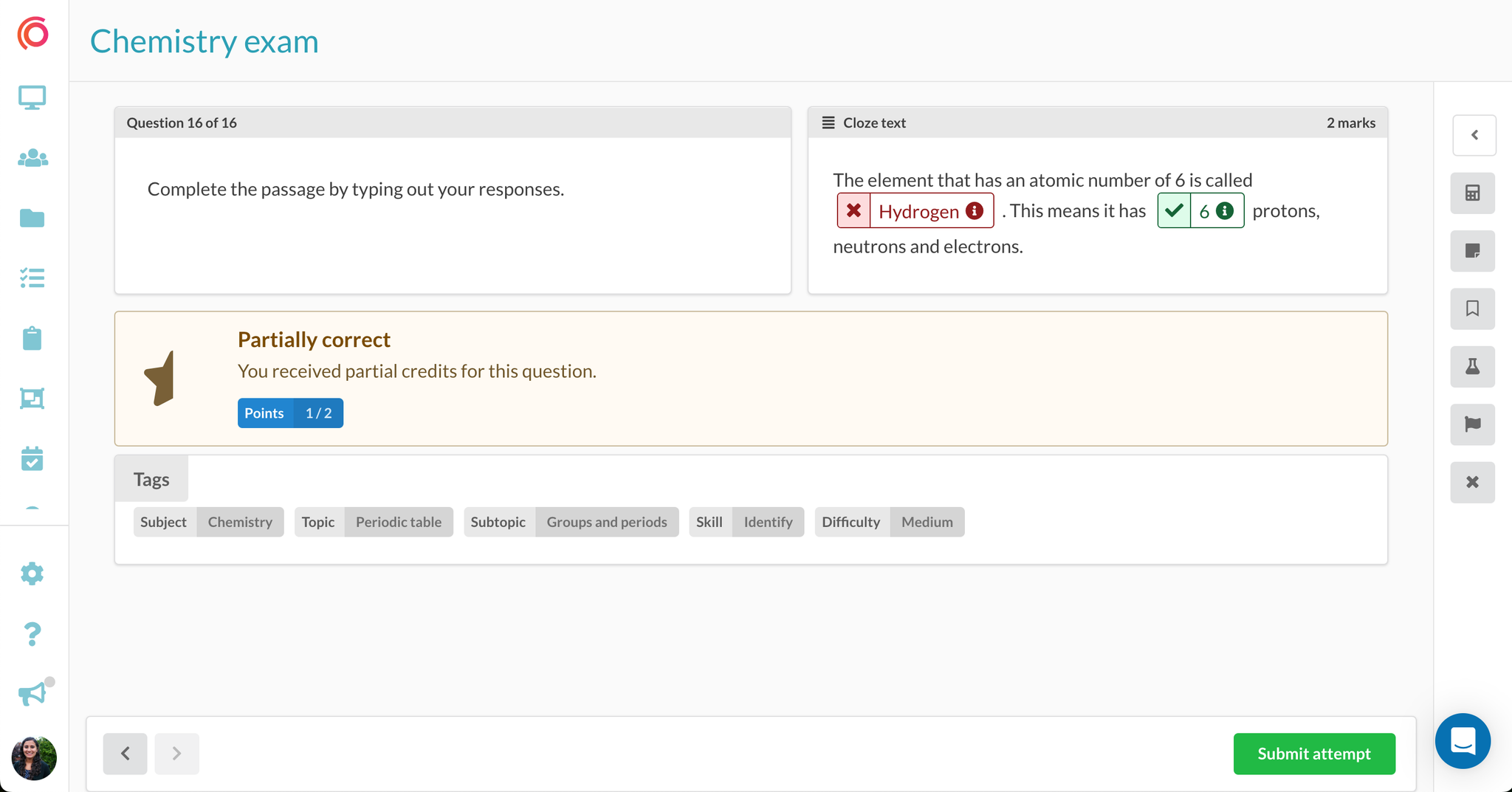
Better platforms go further, with automatic marking for fill-in-the-blank, dropdown, and short written responses (cloze questions).
That means you can run a wider range of question types without adding to your marking queue. Time saved on grading can go back into teaching, student support, or whatever your team needs most.
2. Customisable, weighted and dynamic exams
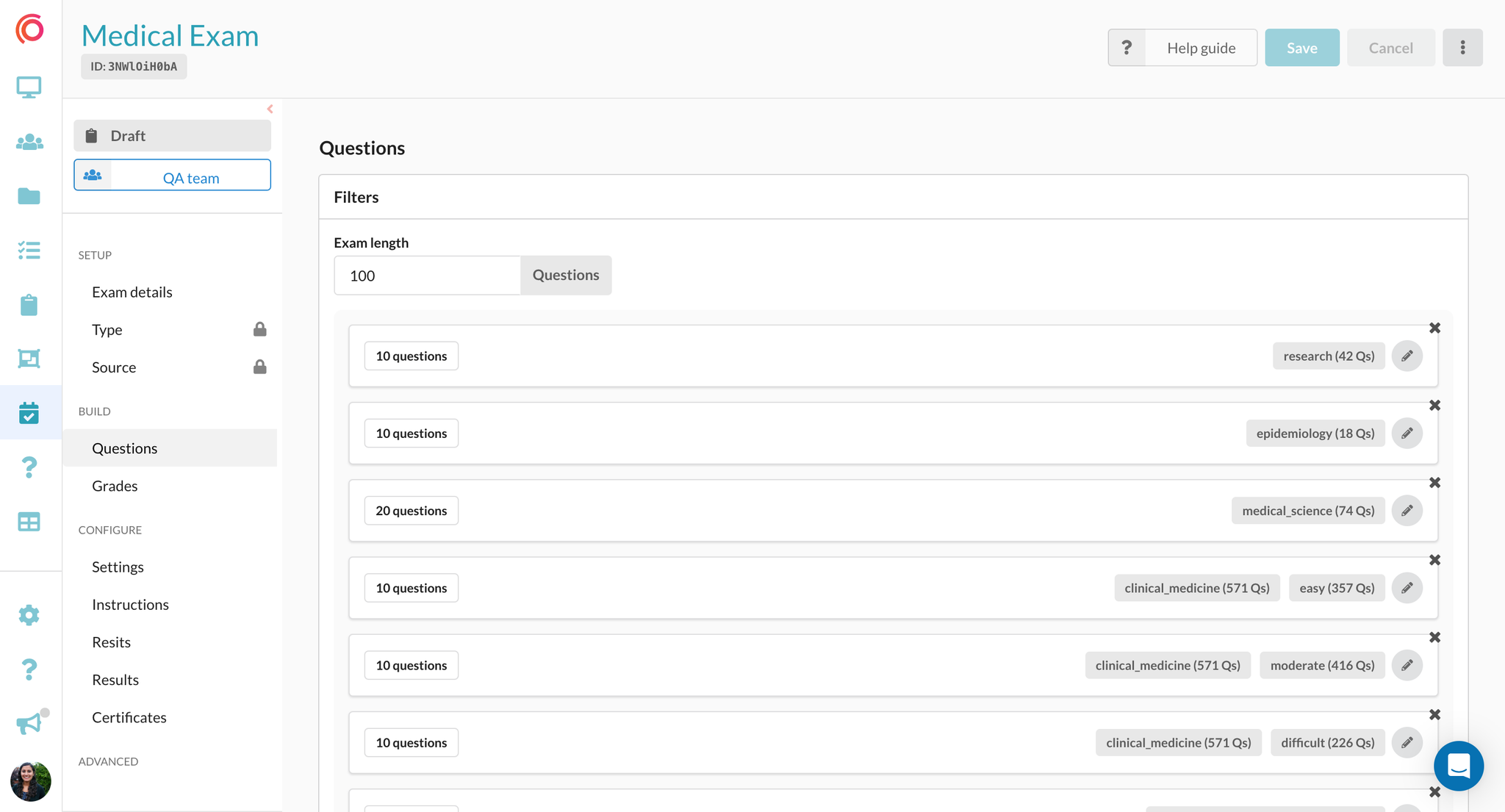
Building a weighted exam, where each candidate gets a unique paper drawn from a question bank, is fiddly to do by hand. On a decent platform, it is much quicker.
Pick how many questions you need and which tags to filter by. For example, you might set "10 questions tagged 'cardio'". In a few minutes, you can generate dynamic exams with different questions per candidate, while keeping the overall difficulty balanced.
Enhanced exam security
There is a security benefit too. When everyone gets a different paper, collusion gets much harder, which helps keep the assessment fair.
3. Instantly awarding branded certificates
Printing and posting certificates slows everyone down: your team handles fulfilment, and candidates wait.
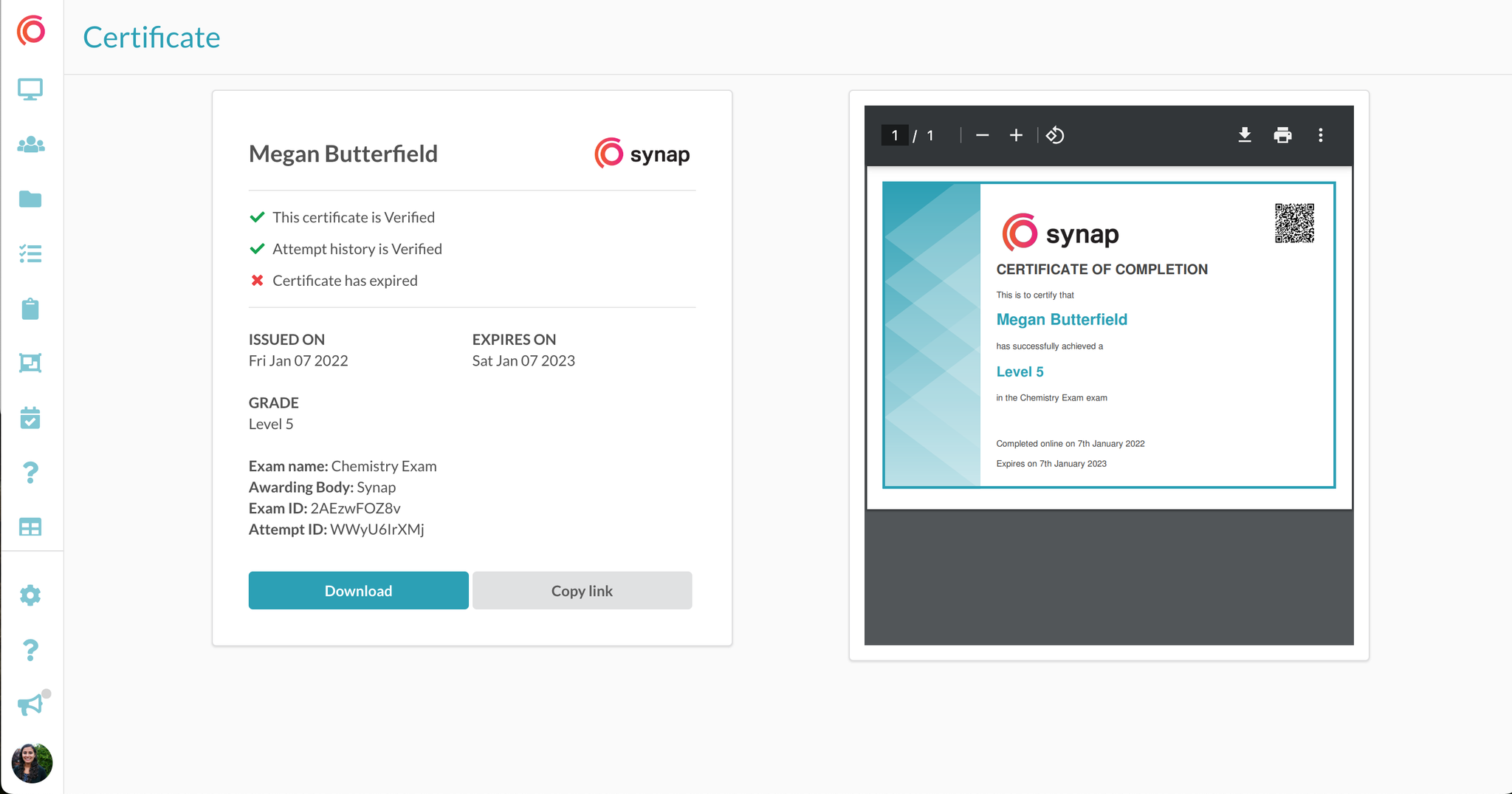
With online certificates, credentials can be issued as soon as someone passes. You can include your organisation's logo and branding, plus the certification date, exam name, and expiry date.
Additional certificate security
Synap also provides a certificate verification page, so employers or managers can check a certificate is genuine. Less risk of tampering, and candidates have something they can share with confidence.
4. Streamlining retake processes
Retakes have a way of piling up. Someone did not pass, someone else needs a resit, and suddenly you are tracking eligibility, timing, and individual follow-ups.
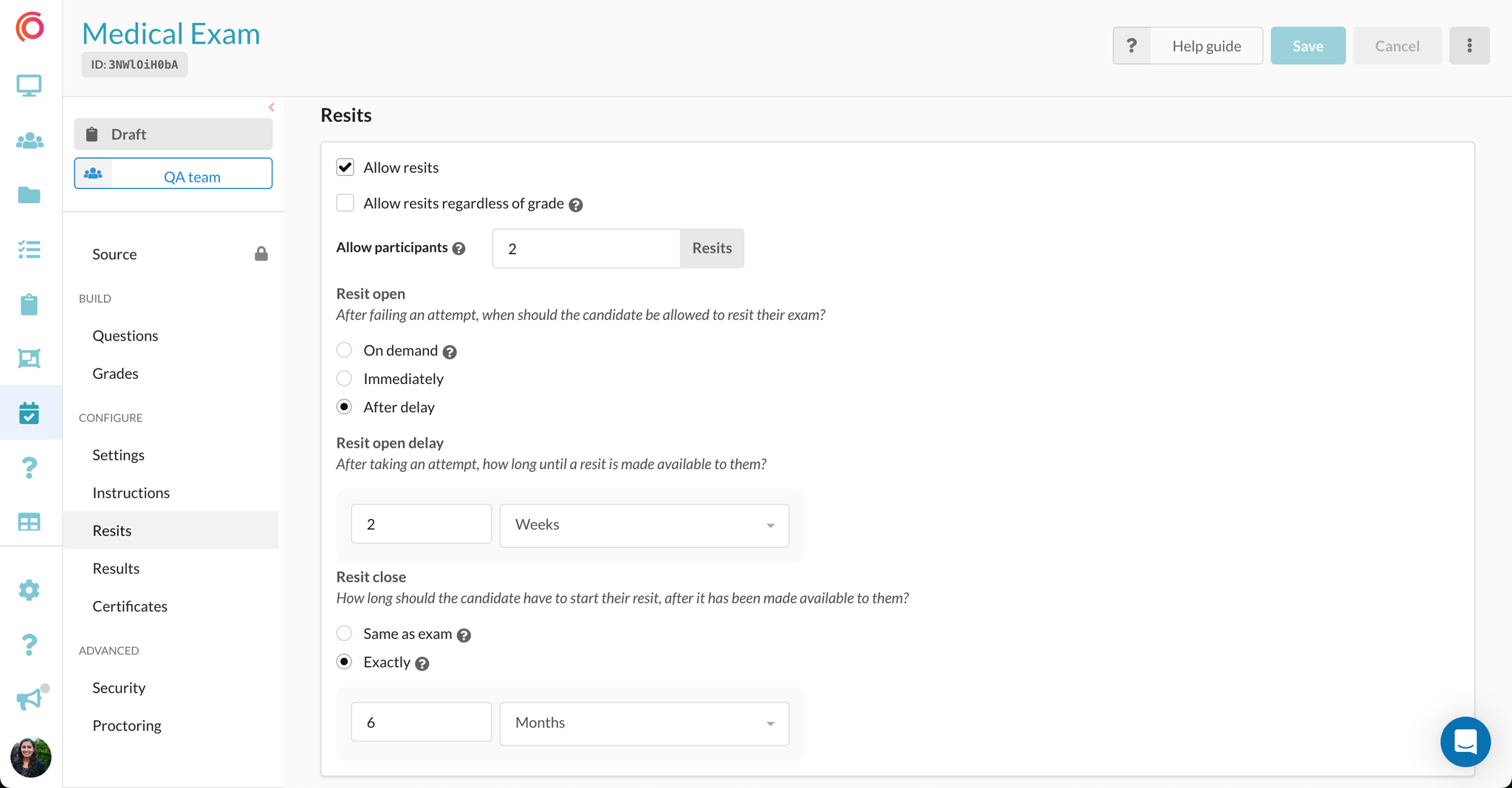
Online exam software lets you set how many retakes each candidate gets and configure when retakes open.
Flexibility for scheduling retakes
You can release retakes straight away or after a cooling-off period, so candidates have time to prepare. What used to be a manual chain of emails and spreadsheets becomes a few settings.
5. Precise grade calculations
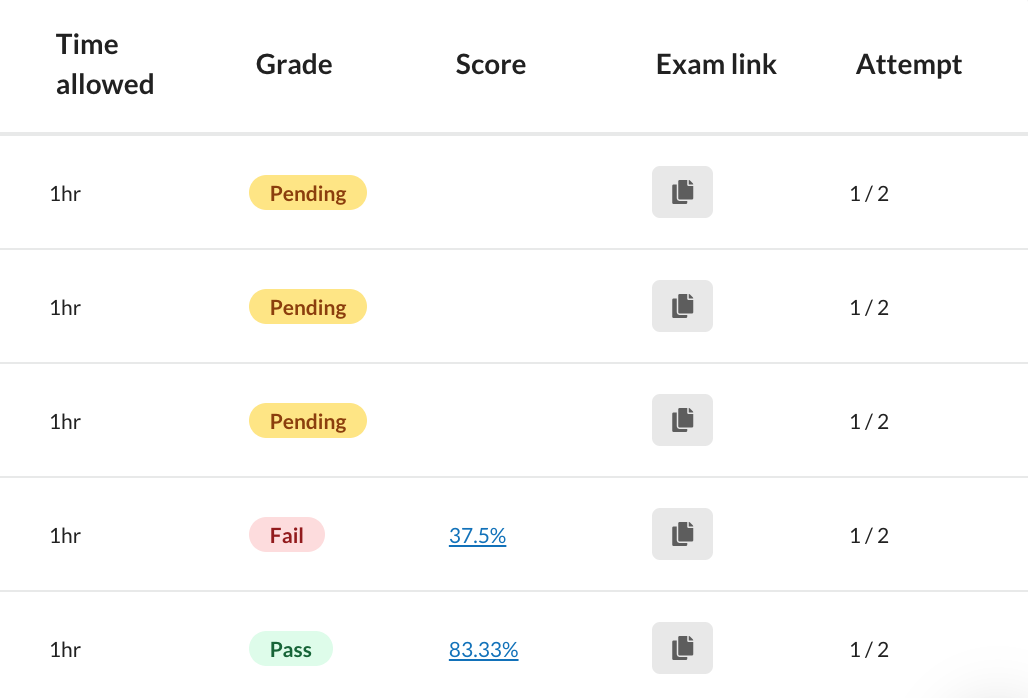
Grades need to be right, especially for high-stakes exams. On paper, tallying scores by hand is slow and easy to get wrong[3]. Online exam software calculates scores (as a percentage) and grades (pass/fail, and so on) for you.
Spreadsheets help, but manual entry still introduces errors. On platform, scores and grades are worked out instantly, which saves time and keeps data consistent.
6. Provide immediate results
Candidates hate waiting for results. Under traditional processes, that can mean days or weeks of uncertainty, particularly before a retake or certification decision.
When exams use auto-marked questions, such as multiple choice or fill-in-the-blank, results can go out as soon as the attempt is submitted. No queue for manual marking.
7. Accelerate feedback delivery
Useful feedback needs to land while the exam is still fresh. That matters even more when someone is preparing for a retake [4]. Research on the testing effect suggests feedback is most effective when it is honest, specific, timely, and gives learners clear direction on how to improve.
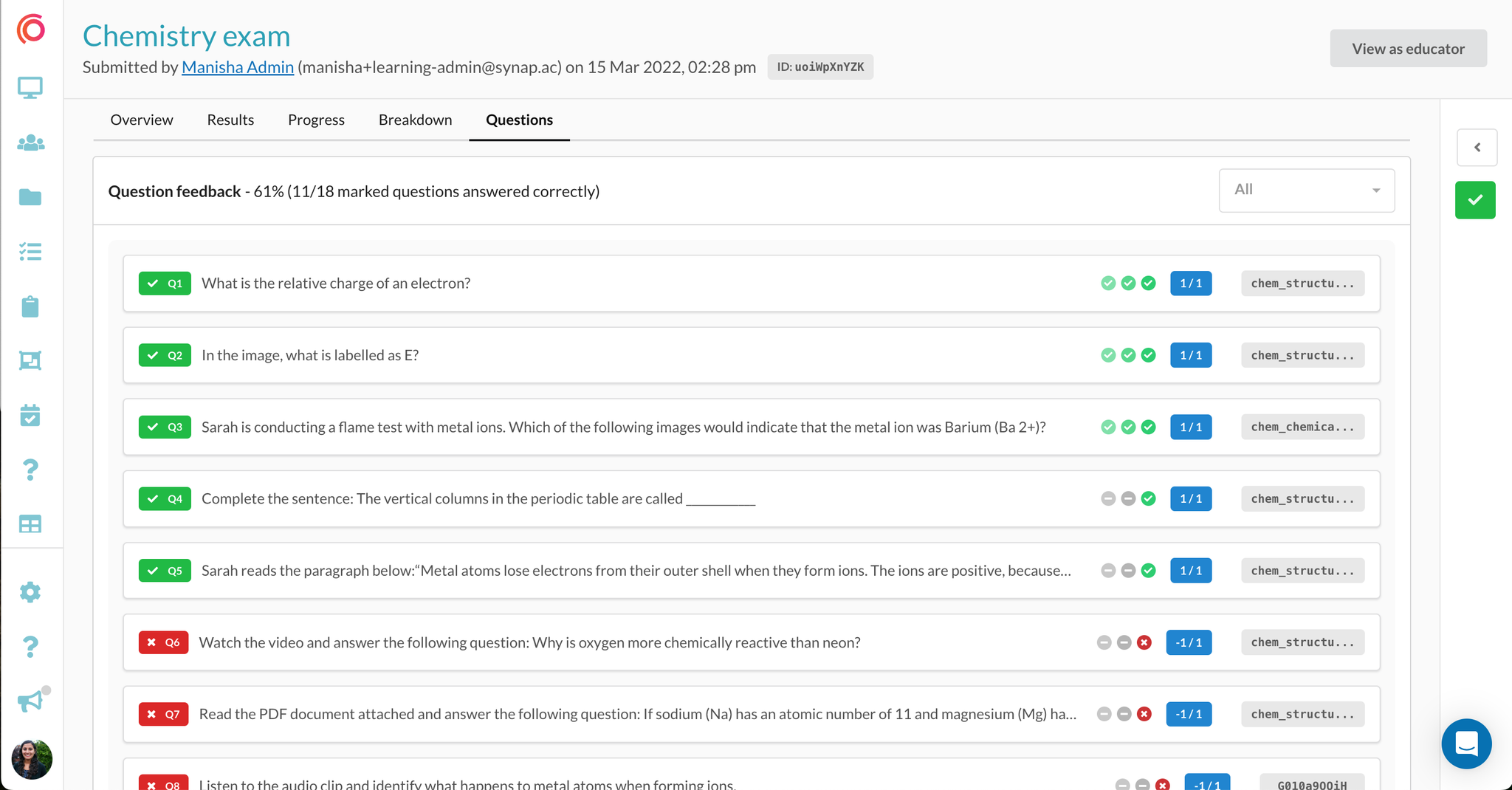
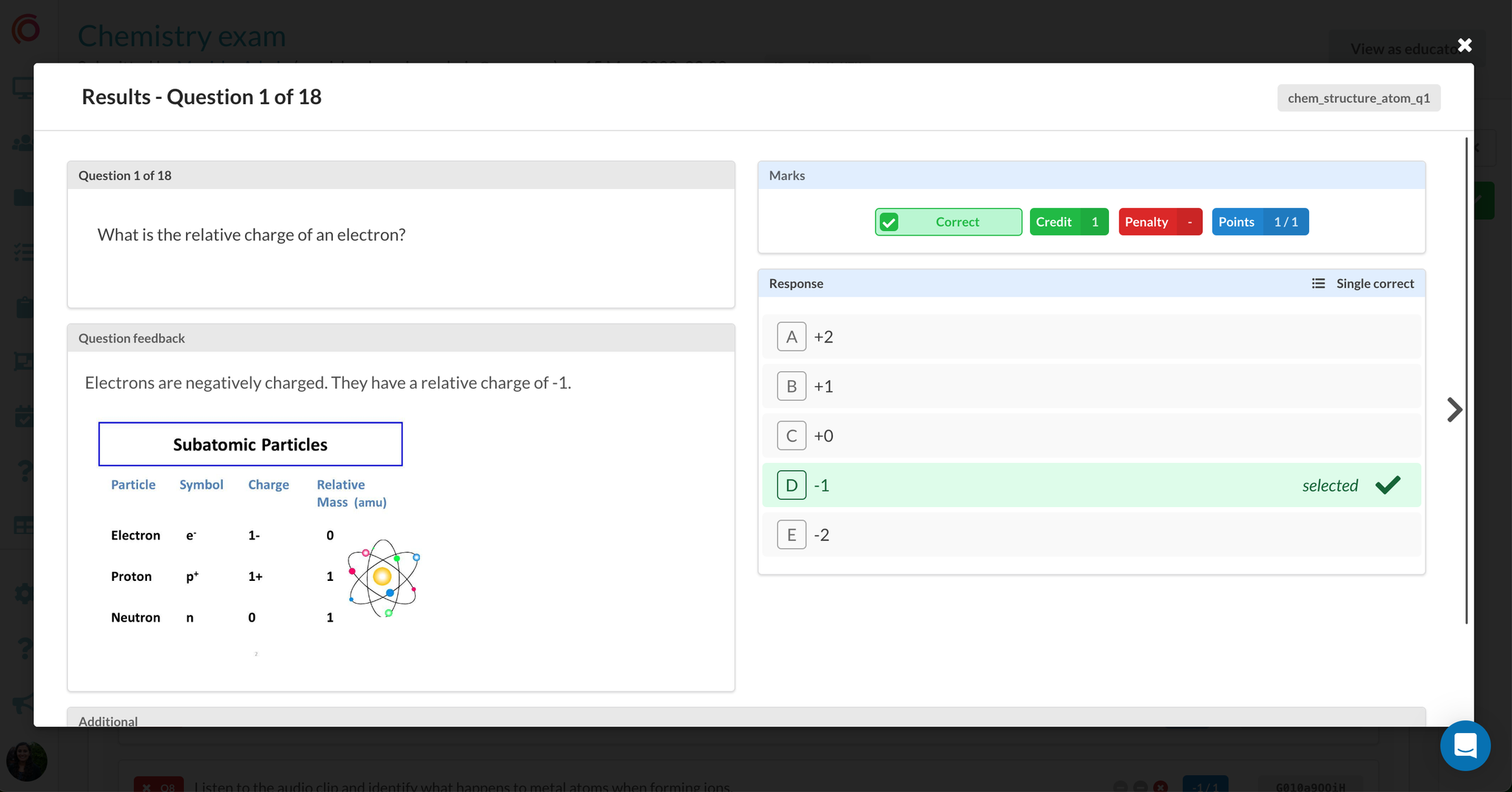
An online exam platform can deliver question-level feedback automatically, with images, videos, or links to learning materials. For auto-marked questions, candidates can see that feedback right after they finish.
Tailored feedback
Educators can also add personalised comments per question, so candidates get specific pointers on what to improve, not just a number.
8. Effortless candidate enrolment into the exam
Getting candidates into the right exam sounds simple until you are doing it at scale: checking access, matching the right paper, sending invites one by one.
Many platforms connect to your existing stack to automate enrolment. With APIs or a Zapier integration, you can link your exam platform to a CRM, LMS, website, database, or eCommerce store and assign exams automatically when someone signs up or purchases.
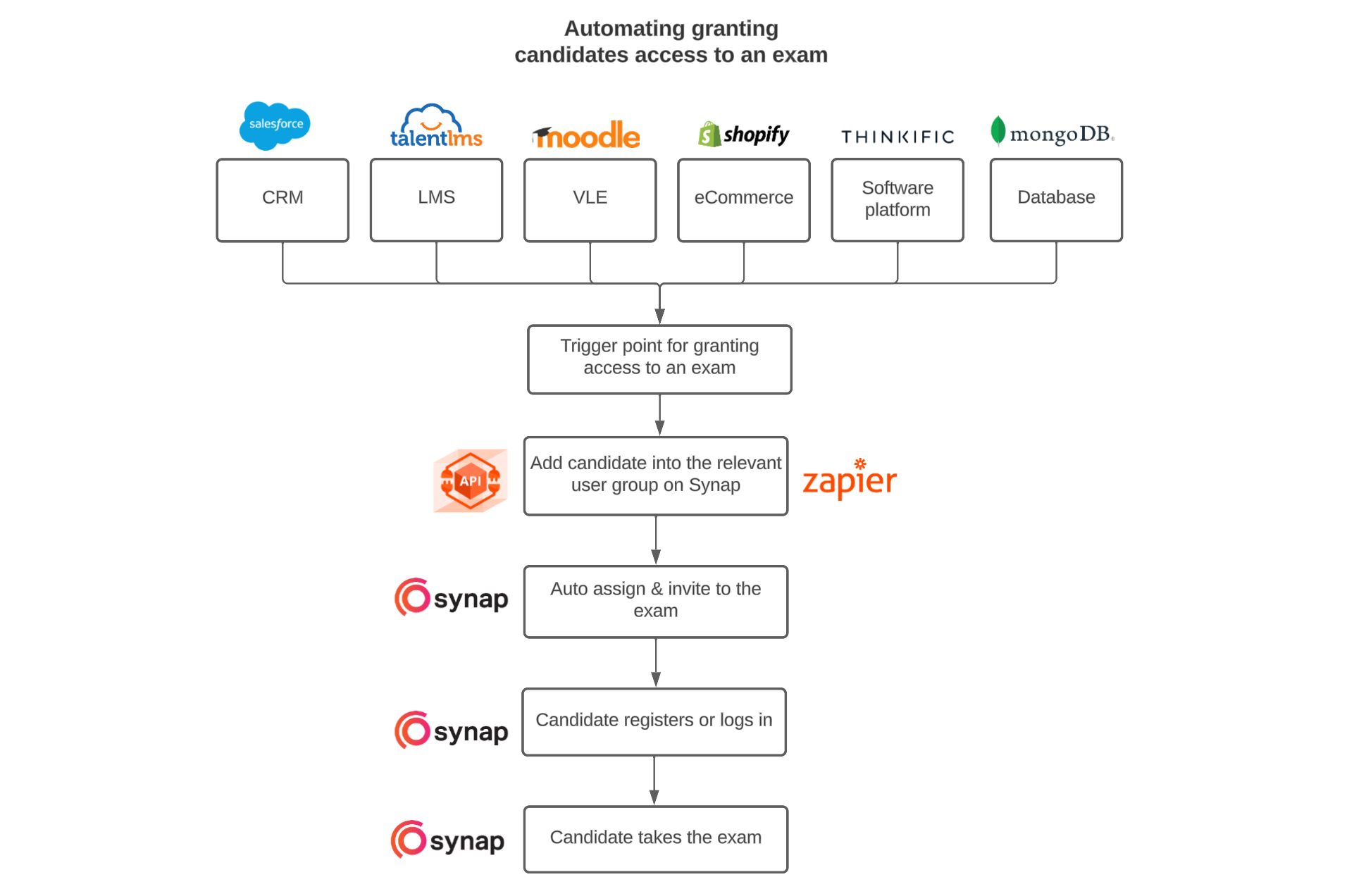
9. Seamlessly integrating exam results with existing systems
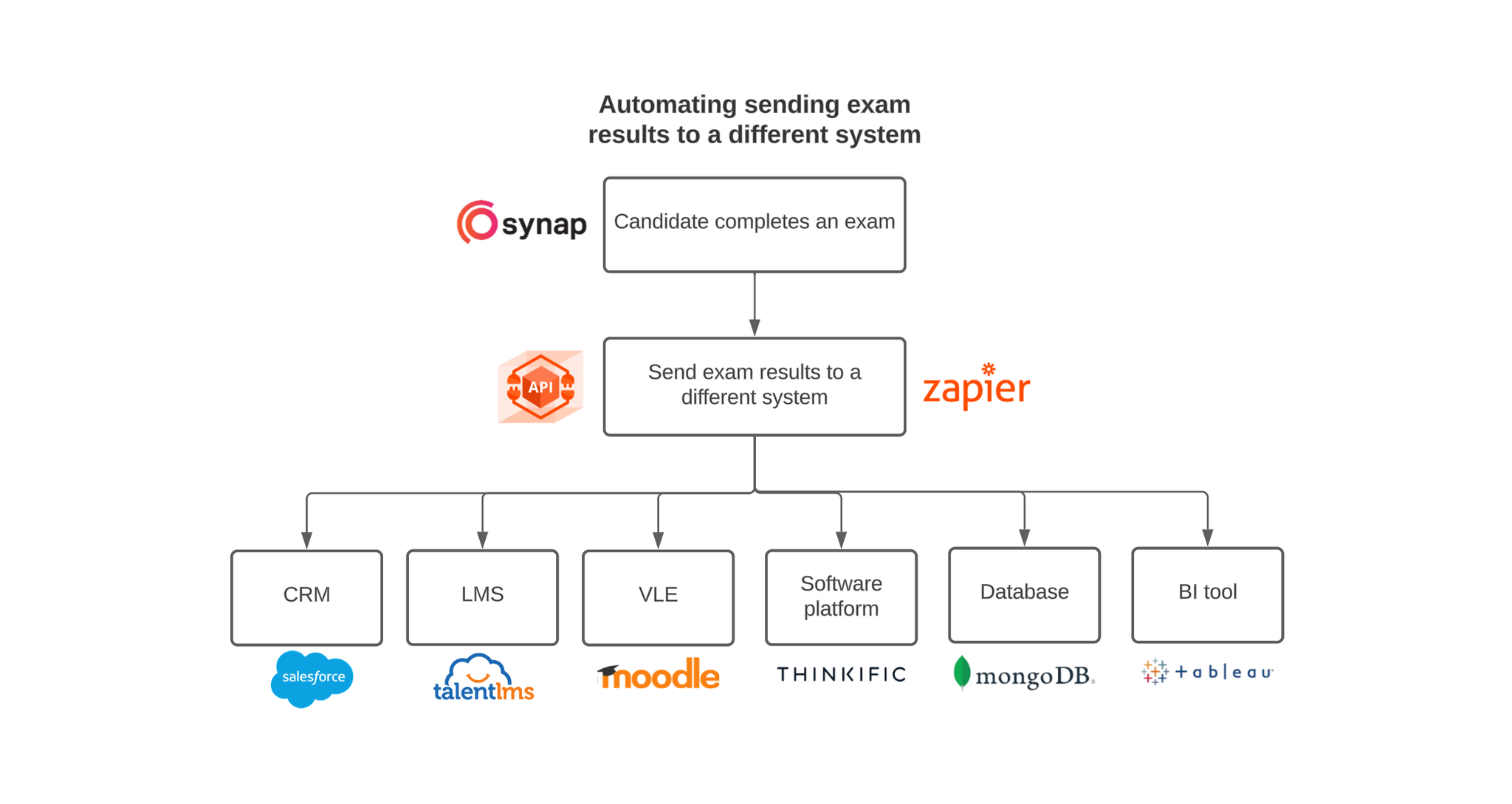
Pulling results out of one system and into a CRM, database, or BI tool by hand is tedious, and mistakes creep in easily.
APIs or Zapier can push results to the tools you already use, so your data stays in sync without someone running exports every week.
10. Flexible proctoring for exam integrity
Proctoring supports exam security, but live monitoring is hard to staff for long exams, big cohorts, or candidates across time zones.
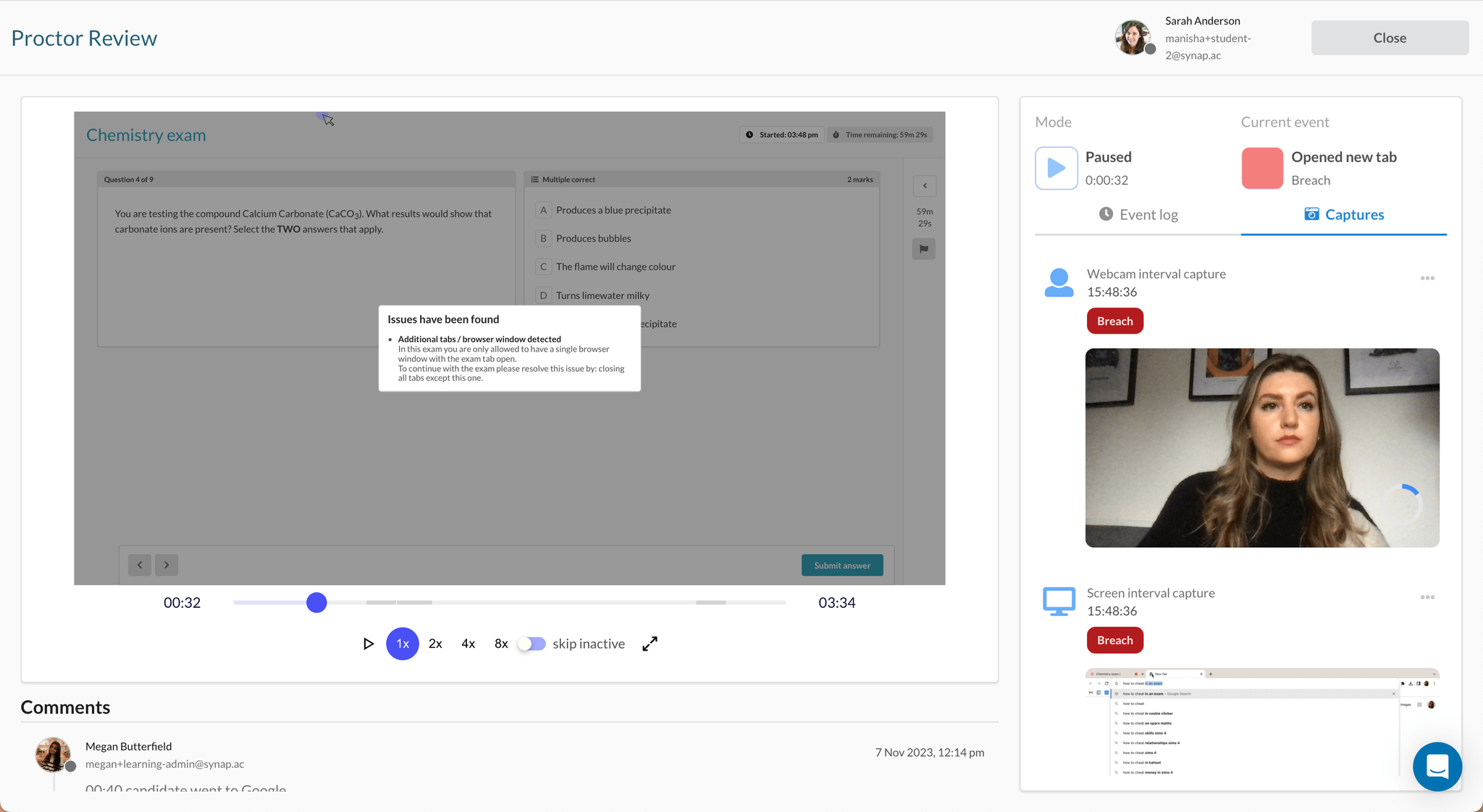
Synoptic proctoring, built into Synap, captures webcam and screen screenshots during the exam and logs breaches for your team to review afterwards.
Data is ready as soon as the attempt finishes, so reviewers can start with the highest breach counts instead of watching every minute of footage.
On demand proctoring
Synap also supports on-demand proctoring, so candidates can sit a secure exam when it suits them without your team blocking out live monitoring slots.
Discover how Synap uses these features to streamline online exams
Want to see how this works for your exams? Book a tailored demo and try Synap with a 14-day free trial.
References
- Department of Education. (2018). Exploring Teacher Workload. https://assets.publishing.service.gov.uk/media/5aa1189e40f0b64d821c40db/Exploring_teacher_workload.pdf
- Leunig T. (2012). Academics need to spend more time teaching and less time marking. https://www.theguardian.com/higher-education-network/blog/2012/jul/03/tim-leunig-on-teaching-and-marking
- Klein J. The failure of a decision support system: inconsistency in test grading by teachers, Teaching and Teacher Education. ScienceDirect. 2002; 8(18): 1023-1033. https://www.sciencedirect.com/science/article/pii/S0742051X02000574
- Yang BW, Razo J, Persky AM. Using Testing as a Learning Tool. Am J Pharm Educ. 2019 Nov;83(9):7324. https://www.ncbi.nlm.nih.gov/pmc/articles/PMC6920642/